
The field of traumatology and orthopedics today is not just about fractures and bruises, but about how to maximize a patient’s quality of life with minimal effort. Traumatology is one of the most technologically diverse areas of medicine. Modern science offers a wide range of devices, procedures, as well as surgical and non-surgical methods for correcting musculoskeletal disorders.
Why is that? To ensure that patients can move freely without pain or limitations. The Rudenko Medical Center is ready to dispel all myths surrounding one of the most talked-about treatment methods for patients with traumatic conditions — PRP therapy.
This method is based on the para-articular or intra-articular injection of platelet-rich plasma derived from the patient’s own blood through centrifugation. Platelets serve as the driving regenerative force, directing the body’s resources toward local joint recovery directly at the site of the problem.
1. Does it really work, or is it just a trendy placebo?
First of all, it is important to understand that any method has its limitations, potential, indications, and contraindications. PRP is not a magic pill that can restore a completely destroyed joint, and such promises seen on your gadget screen should not be trusted.
However, trusting modern science, which is based on solid evidence and years of research, is not only possible but absolutely necessary.
PRP is not about instant results, but rather about a long-term approach to joint care. Degenerative joint changes are a gradual process involving the loss of natural elasticity and moisture. PRP helps restore the necessary joint fluid and stimulates its natural production by the body.
How does it work?
After plasma is injected into the tissues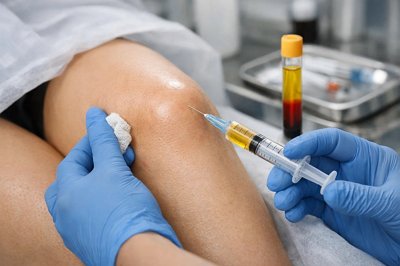 :
:
- cells responsible for healing are activated
- inflammation is reduced
- blood circulation improves
- formation of new fibers is stimulated (for example, in tendons)
This is not just pain relief — it addresses the root cause of the problem.
2. Is the procedure painful?
The PRP therapy process includes two stages:
- First, a required volume of venous blood is drawn. This is practically painless — if you have ever had a blood test from a vein, the sensation will be familiar.
- Next, after processing the blood sample, the prepared plasma is injected into the joint cavity or surrounding ligaments. The sensation is similar to any injection and may feel slightly uncomfortable mainly due to the unusual injection site.
!!! Local anesthesia is not used during PRP, as it may potentially affect platelet activity and reduce effectiveness.
3. How quickly does the effect appear and how long does it last?
The answer depends on many factors, including the initial condition of the joint, comorbidities, and the patient’s lifestyle. PRP provides a cumulative effect, typically noticeable after 2–3 weeks as pain relief. This is the time needed for platelets to become fully active at the injection site. The most pronounced results are usually seen after 1–2 months.
After completing a PRP course, patients can enjoy pain-free movement for approximately 6–12 months. After this period, a follow-up visit with the treating physician is recommended to assess the results and plan further treatment.
The duration and effectiveness of PRP therapy are crucial for life planning. That is why we carefully support patients throughout their journey to healthier joints.
4. Can it be rejected by the body?
PRP therapy uses a product made from the patient’s own blood, so the risk of allergic reactions or rejection is practically eliminated. For safety, the procedure is supervised by an anesthesiologist, ensuring full control and prevention of adverse reactions.
The method may be limited in cases of:
- blood clotting disorders
- active infections, both in the joints and throughout the body
- oncological diseases
- certain systemic conditions associated with rheumatic disorders
Before the procedure, the doctor evaluates these factors and may postpone treatment until the patient’s condition stabilizes.
5. How many procedures are included in a course?
PRP therapy is spread over time and requires a systematic and comprehensive approach. We understand that before starting, patients need to consider their budget and schedule for comfort and planning. Typically, a course consists of 3–5 injections at intervals of 7–14 days. This schedule maximizes bioavailability and treatment effectiveness.
6. Are there any side effects after PRP?
Like any medical procedure, PRP therapy involves certain rules and limitations afterward.
- During the treatment course, we recommend:
avoiding nonsteroidal anti-inflammatory drugs (NSAIDs), as they inhibit platelet activity - limiting physical stress on the joint for 2–3 days after the procedure
- avoiding saunas, steam baths, and hot baths to prevent swelling and local inflammation
7. What is the difference between PRP and hyaluronic acid injections or blockades?
To understand what is appropriate in your specific case and why a particular method is chosen, it is important to identify the mechanism of action.
- Blockade — involves intra-articular or para-articular injection of hormonal medications that quickly relieve pain and inflammation but do not restore damaged tissues.
- Hyaluronic acid — helps restore the joint’s cushioning function. While highly bioavailable, it is not entirely natural to the body.
- PRP — a plasma therapy method aimed at restoring the structure of tendons, cartilage, and ligaments.
The Rudenko Medical Center is always committed to your health and keeps pace with modern technologies in traumatology. We are always ready to offer you the best path to recovery and walk it together with you.