
 Almost every person will encounter the problem of joint pain at least once in their life. Acute post-traumatic or chronic rheumatic - joint pain has various clinical manifestations depending on the genesis of the pain syndrome.
The Rudenko Medical Center in Zaporizhia has a solution that can improve the quality of life, relieve pain, and restore the joy of full movement for a huge proportion of patients, namely, intra-articular injections of glucocorticosteroids.
Intraarticular administration of drugs, in particular glucocorticosteroids (GCS), is one of the widely used therapeutic procedures and a common technique in the field of traumatology and orthopedics.
These drugs allow:
- to carry out effective therapy against inflammatory processes in the joints,
- to help reduce pain,
- to restore functional motor activity of patients with various causes of pathological changes in the joints.
However, despite their incredible effectiveness, the prescription of glucocorticosteroids has clear limited indications, a list of risks and side effects that require careful consideration and detailed discussion of all details with the patient.
Effects of intra-articular corticosteroid injections.
Glucocorticosteroids are drugs that are derivatives of natural hormones of the adrenal cortex and have an effect on pathological inflammatory processes in the body.
Intra-articular injections of GCS have the following effects in the treatment of joint pathologies:
- Anti-inflammatory
Glucocorticosteroids suppress the activity of leukocytes involved in the inflammatory process, inhibit the production of pro-inflammatory substances such as cytokines and prostaglandins, which in turn reduces inflammation and has an anti-edema effect.
- Analgesic
The anti-inflammatory effect of corticosteroids has an analgesic effect on pathological processes in the joints, especially in conditions of acute disease, which is typical for metabolic arthritis and post-traumatic bursitis/synovitis.
- Anti-edema
Given the analgesic effect of GCS and the pronounced reduction in the manifestations of edema, as a result, motor activity in the joints is restored, which contributes to a return to the usual daily routine and rhythm of life.
- Immunosuppression
Glucocorticosteroids reduce the reactivity of the immune system, which has a beneficial effect in autoimmune joint diseases such as rheumatoid arthritis.
 Indications for intra-articular injections of glucocorticosteroids:
The list of pathologies for the treatment of which intraarticular injections of corticosteroids are used is quite extensive. Among them, the most common are:
- Osteoarthritis
Formerly known as osteoarthritis, is one of the most common causes of joint pain, especially in older people. Intra-articular injections of corticosteroids can significantly reduce pain and inflammation, improving joint mobility.
- Rheumatoid arthritis
A disease of autoimmune origin that causes chronic inflammation in the joint tissues. Glucocorticosteroids provide good control of the inflammatory process and effectively relieve pain in patients, even with an active phase of the arthritis.
- Joint and Periarticular Injuries
Intra-articular injections of corticosteroids are used for joints in the post-traumatic period of conditions such as sprains and tears of ligaments, tendons, meniscus tears, as well as in post-traumatic inflammation, to relieve pain and accelerate the recovery process.
- Pseudogout
A condition caused by the deposition of calcium crystals in the joints and leading to acute inflammatory attacks with severe pain. In this pathology, intra-articular injections of corticosteroids have an invaluable effect on reducing inflammation and pain.
- Bursitis
Bursitis is most often a post-traumatic condition, often accompanied by pain and characterized by limited movement. Corticosteroid injections are used in this condition to relieve swelling and effectively restore motor activity.
- Other diseases
Glucocorticosteroids may be used in the treatment of certain other inflammatory joint diseases, such as joint manifestations of other autoimmune processes, connective tissue diseases of the body, gout, and ankylosing spondylitis.
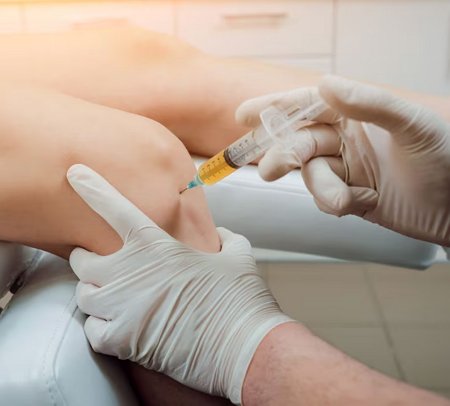 Technique for performing intra-articular injections to reduce your level of anxiety before an unknown medical procedure:
Correct and technical execution of an intra-articular injection is an important component for achieving the effectiveness of the procedure and minimizing the risks of complications. The injection can be performed in an outpatient setting by a traumatologist or orthopedist. The main stages of the injection technique:
- Patient preparation
It is important to provide the patient with all the information they need about how the procedure will be performed, what they can expect to feel, what is normal after the procedure, and how to recognize symptoms that require medical attention. It is important to establish contact with the patient to gain compliance and explain in an accessible manner all the benefits of the method, as well as potential risks and side effects.
- Skin preparation
Before inserting the needle, the injection site is thoroughly treated with antiseptic agents to prevent infection. Needles of different lengths and thicknesses are used to administer the drug, depending on the type of joint. Do not be afraid of the size of the needle, this is dictated by many years of experience and the anatomical features of the structure of the joints.
The needle is inserted into the joint cavity through the skin and subcutaneous tissue, usually under the control of an ultrasound sensor. The doctor uses a technique that allows for precise entry into the joint cavity to ensure delivery of the drug directly to the site of the pathological process.
- Post-procedural observation
After the drug is administered, the patient may be advised to remain under the supervision of a physician for 30-60 minutes to prevent possible allergic reactions or complications.
Possible negative reactions and side effects:
Although intra-articular injections of corticosteroids are generally safe and well-studied, they can have certain risks and side effects. Their incidence is quite rare, but it is imperative to inform the patient about their likelihood. These include:
- Infection
Incorrect injection, failure to follow aseptic techniques, or contamination of the puncture site after the procedure, with a decrease in the individual's body resistance, can lead to infection in the joint. This is one of the most serious complications that requires immediate treatment.
- Periarticular tissue damage
With incorrect technique, the needle can damage nerves, blood vessels, or the ligamentous apparatus, which can lead to complications such as bleeding, pain, or temporary dysfunction of the joint.
- Atrophy of joint tissues
Uncontrolled and unjustified prolonged use of glucocorticosteroids can lead to atrophy of the cartilage component of the joint, a decrease in the thickness and density of the cortical layer of the bone, or a weakening of the ligamentous apparatus of the joint. These effects can increase the progression of degenerative changes in the joint.
Rudenko Medical Center in Zaporizhia is an institution with many years of experience in helping patients, constantly developing and finding the best solutions for the most difficult clinical cases. Our professionalism and well-coordinated team are always on guard for your health and are ready to come to your aid to change your life for the better.