
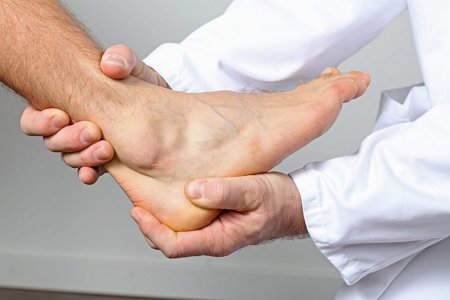
 Almost everyone at least once in their life turned to a doctor with pain in the ankle joint. Lameness and joint pain are only superficial signs of an ankle health problem. Age-related tissue changes, concomitant diseases or injuries do not have the best effect on the joints. Sprains, bruises, dislocations in the joint are frequent, unpleasant and lead to long-term consequences for the functionality of the limb. And metabolic pathological processes, although not so often affecting the ankle, directly affect the patient's quality of life, taking away the opportunity to fully move.
In order to prevent irreversible changes in the joint in time and to prevent them, it is necessary to contact an orthopedic trauma specialist at the Rudenko Medical Center in a timely manner. A professional team of experts helps hundreds of patients experience the joy of life without limitations every day.
How does arthrosis develop in the ankle joint?
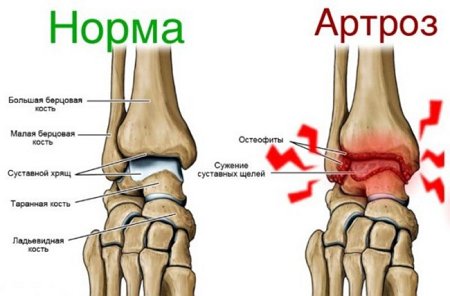
A mandatory component of the development of arthrosis in any joint is the body's loss of fluid and elasticity of connective tissue. In the case of the ankle joint, this is only a secondary process. The ankle joint is a complex, mobile structure that is involved in constant active movements. That is why the age-related changes in the joints do not have a strong expression in the ankle. Injuries in the ankle joint are the most common cause of the development of arthrosis of the articular surfaces. Lameness and pain in the limb can hide chronic ruptures of tendons and ligaments, the development of bursitis and tendinitis. And systemic diseases can affect the joint and provoke sclerosing and destruction of the joint surfaces, development of marginal bone growths, reconstruction of the bone structure of the joint components, and significant narrowing of the joint space.
What pathologies provoke the development of arthrosis in the ankle-foot joint?
- Injuries:
- -two-three-bone intra-articular fractures with rupture of the distal inter-tibial syndesmosis and dislocation of the foot
- fractures of the diaphyses of the tibia with long-term immobilization of the limb with external fixation devices
- gunshot fractures with bone tissue defects
- Diseases of the lower leg and foot:
- purulent - phlegmon, abscesses, osteomyelitis
- metabolic\infectious – gout, rheumatoid arthritis, diabetes, psoriasis, tuberculosis, dysentery
In particular, the development of degenerative-dystrophic processes in the ankle-foot joint is influenced not only by direct factors, but also by indirect ones. Risk factors for the development of ankle arthrosis are:Надмірна вага
- Hypodynamia
- Congenital abnormalities of limb development (varus/valgus deformities, dysplastic changes)
Diagnosis and treatment of arthrosis of the ankle joint
It is easy to guess about problems with the ankle joint:
- restriction of movement
- chronic aching joint pain
- periodic twisting of the foot
- a clicking or crunching sensation when moving
- deformation of the joint
These signs unanimously indicate degenerative processes in the ankle.
And if these symptoms occur against the background of an increase in the volume of peri-articular tissues, swelling, reddening of the skin, or are accompanied by a rash, there is a possibility that it is a secondary genesis of arthrosis.
In order to correctly assess the state of your joints and determine the tactics of diagnosis and treatment, it is necessary to immediately consult a doctor at the Rudenko Medical Center. Our qualified staff of specialists daily sees patients with various pathologies of the ankle joints and takes care of everyone's health. Our specialists maintain the most personalized approach while maintaining world standards in the treatment of joint pathologies. After consulting with you and examining the joints, the doctor will refer you to a set of diagnostic measures, which will include both instrumental and laboratory diagnostics.
What methods of diagnosing pathologies of ankle joints are used?
- Radiography in 2 projections
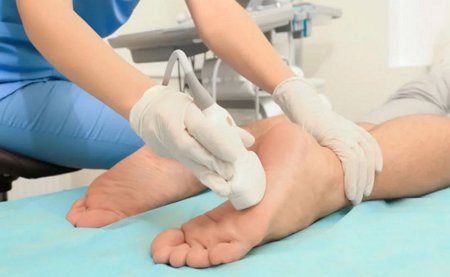
- Ultrasound diagnostics
- Computed tomography
- Magnetic resonance imaging
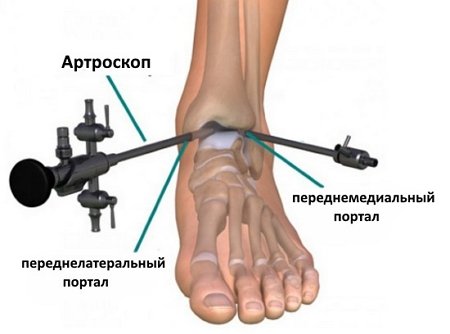
- Arthroscopy, joint puncture
- Analyzes of blood, urine, synovial fluid
- Consultations of related specialists: rheumatologist, vascular surgeon, purulent-septic surgeon
Treatment of arthrosis of the ankle joint should have a multimodal approach and include both drug therapy and an algorithm of dosed physical exercises selected by a rehabilitation specialist to ensure full recovery of motor activity in the joint.
Conservative therapy is aimed at eliminating the pain syndrome in the joint, reducing swelling, and eliminating the cause of the underlying disease, if any.
In cases where drug therapy does not give the desired effect and the progression of arthrosis of the ankle joint fails to be controlled, orthopedic traumatologists turn to extreme methods of treatment - surgical interventions. In order to restore the patient's ability to move without pain, prosthetic ankle joints are performed with the replacement of components with artificial components, or arthrodesis - complete exclusion of the joint from movement in order to prevent its further destruction.
Take care of the health of your joints together with Rudenko Medical Center.
Call for an appointment +38(066)8678727 or +38(067)8678727.