
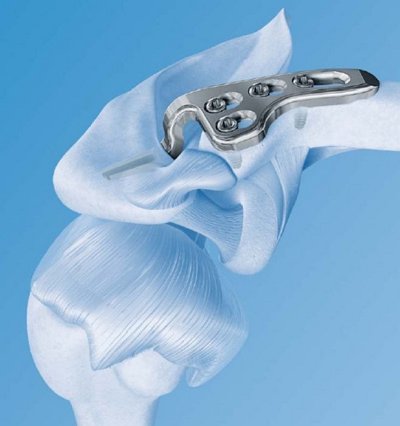
 The Rudenko Medical Center aims to provide patients with injuries with prompt, effective, and qualified care, as time and our expertise in trauma are the key to the fastest possible recovery.
If you are concerned about:
- sharp pain in the shoulder
- swelling of the soft tissues of the shoulder
- restriction of limb movements
- presence of hematomas, a crunching sensation in the arm
Also, these symptoms, which occurred as a result of an injury, are quite possible that there is a fracture of the humerus.
Fractures of the humerus are a common pathology that develops as a result of even a simple unsuccessful fall and are equally characteristic of patients of any age category.
The main difficulty in the case of humerus fractures is that in the absolute majority of cases such fractures require surgical treatment, namely osteometallosynthesis. Usually, there is a widespread opinion among patients that osteometallosynthesis is a procedure that carries many risks and complications associated with a large volume of surgical interventions and a difficult rehabilitation period. In modern traumatology of the Rudenko Medical Center, priority is given to methods and techniques that ensure high functionality of the limb after treatment, minimizing the invasiveness of the operation and the risk of complications.
Osteometallosynthesis is the establishment of an artificial metal structure that holds bone fragments in an anatomical position, leveling the diastasis between them and allowing the fracture to heal as actively as possible.
There are:
- Bone fusion – plates, screws and cerclages
- Endosteal fusion – rods, pins, Kirschner and Ilizarov wires
Both techniques are used depending on the type of fracture and the degree of displacement of the fragments. The most important thing is that the techniques are the least traumatic to achieve the best results.
Minimally invasive (minimally invasive) approaches to osteometallosynthesis have a number of undeniable advantages:
- Maintaining maximum blood supply to the bone:
Minimizing periosteal damage avoids osteonecrosis, reducing the risks of bone ischemia due to vascular damage.
- Reducing postoperative pain:
Less trauma to soft tissues contributes to a more comfortable rehabilitation. The less painful the recovery period, the faster the patient will be able to return to normal life.
- Minimizing the risk of infectious processes:
Shorter surgery time and smaller surgical wounds reduce the risk of postoperative complications due to both less blood loss and less time of contact of open wounds with the external environment.
- Rapid restoration of functional activity:
Ensuring stable fixation allows for early activation of the patient by restoring the anatomical position of bone fragments and the fastest and most effective start of tissue regeneration processes.
Basic techniques of low-traumatic osteometal fixation:
Closed intramedullary osteosynthesis:
The essence of the method is to insert a metal locking pin into the bone canal through a small incision in the soft tissues.
The advantages of the method are:
- Minimize trauma to surrounding tissues
- Even distribution of load on the bone
- Possibility of using the technique in patients with osteoporosis and pathological bone fractures
The method has limitations in application in multifragment fractures with significant polypositional displacement of bone fragments and requires high technological accuracy of execution.
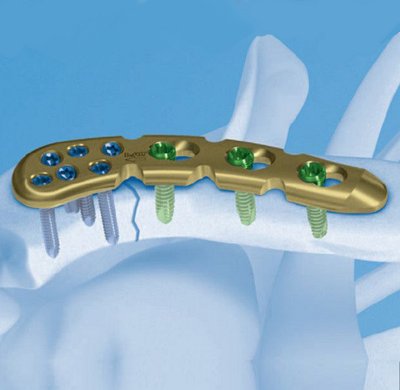
Minimally invasive fracture fixation with plate and screws
The technique is similar to the previous one and involves fusion of the fracture through minimal soft tissue incisions. However, unlike closed intramedullary fusion, plate fixation is successfully used for multi-fracture fractures of the humerus.
The main advantages of the technique are:
- High stability of the metal structure, capable of holding multi-fragment fractures in a permanent position
- Maximum preservation of blood supply and prevention of ischemia of perifocal soft tissues of the shoulder and periosteum of the humerus
Despite the undeniable advantages of this type of osteometallosynthesis, the method requires expensive equipment and intraoperative navigation under X-ray control.
Percutaneous osteometallosynthesis with Ilizarov wires
This fixation technique is used for fractures of the proximal humerus, where the main bone fragments are relatively stable to possible displacement. The pins are inserted through minimal incisions and fix the fracture fragments. After surgery with percutaneous fusion of the bone fracture with pins, there is a need for external immobilization of the limb with a plaster splint.
The Rudenko Medical Center in Zaporizhia has been successfully using minimally invasive surgical techniques for osteometallosynthesis of humerus fractures for many years. Compliance with world quality standards and the experience of our center's specialists allows us to minimize the risks of complications, achieve maximum stability, which in turn will contribute to the fastest possible healing of the fracture and the patient's return to normal life without memories of the injury.