
Looking for the best place to have a hip replacement? So that you don’t have to worry about anything, receive high-quality service at a reasonable cost, and return to your normal life as quickly as possible?
- Why does the hip joint require replacement?
- Are there any contraindications to endoprosthesis?
- How should you prepare for the upcoming procedure?
- Which prosthesis should you choose?
- How is the hip replacement surgery performed and what is the postoperative period like?
Hip joint replacement at Rudenko Clinic turnkey – your right choice.
Turnkey hip replacement surgery cost
Cemented hip prosthesis: from 80 to 95 thousand UAH.
Cementless hip prosthesis: from 100 to 120 thousand UAH.
The indicated price for endoprosthesis includes: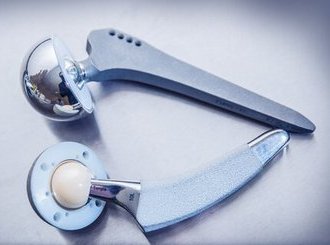
-
Preoperative examination package
-
The surgery itself, including medications and anesthesia
-
Implant cost
-
Pain management during the procedure
-
Consultations with related specialists
-
Stay in a postoperative inpatient unit with comfortable rooms
-
Balanced 5-meal daily nutrition
-
Postoperative rehabilitation with an experienced rehabilitation doctor according to an individual program
Comfortable rooms

5 meals a day

Hip replacement in Ukraine is available in almost every specialized healthcare institution, but everywhere a patient faces many complex questions. What is a justified cost of the procedure, which examinations are required before surgery, which anesthesia is suitable in your case and how to communicate with the anesthesiologist, how will the postoperative period go? These and many other nuances can be avoided by entrusting them to professional orthopedic trauma doctors of the Rudenko Medical Center.
We offer hip neck replacement surgery where you won’t have to worry about minor details.
Why does the hip joint require replacement?
Over time, our joints are affected by internal processes of the body and change. These changes occur both due to natural aging and due to injuries or diseases.
The hip joint is the largest in the human body, capable of bearing the weight of the entire body and ensuring full mobility of the limbs and the person as a whole. It consists of the femoral head and the acetabulum. This joint has a cup-shaped structure and can move in three axes: frontal, sagittal, and vertical.
 What causes may lead to the need for endoprosthesis?
-
Congenital:
-
hip dysplasia and its consequences;
-
Perthes disease.
-
Acquired:
-
fractures of the proximal femur:
A) Head;
B) Neck;
C) Intertrochanteric fractures.
— deforming osteoarthritis of the hip joint with severe pain syndrome and ankylosis of the joint space or without it;
— aseptic necrosis of the femoral head or acetabular roof;
— neoplastic processes with pathological fractures;
— other infectious or metabolic processes leading to significant joint dysfunction with inability to restore it.
Are there contraindications to hip replacement?
As with any surgical intervention or manipulation, there are certain contraindications to endoprosthesis.
These include: decompensated patient condition (heart, respiratory, liver, kidney failure in terminal stages), diabetes mellitus in sub- or decompensation stage, exacerbation of infectious diseases, exacerbation of mental disorders, human immunodeficiency virus and acquired immunodeficiency syndrome, recent myocardial infarctions.
You must inform your doctor about any regular medications, past surgeries, radiation or chemotherapy. This helps minimize risks and allows the specialist to tailor the treatment to your specific clinical situation.
How should you prepare for endoprosthesis?
Your preoperative examination package will include:
complete blood count and urinalysis, blood type and Rh factor, coagulogram, blood glucose test, biochemical blood test (liver and kidney function), as well as RW test for syphilis.
You may also be advised to undergo hip X-ray, ultrasound diagnostics, CT scan, or MRI if necessary.
Consultations with related specialists will be назначены if you have chronic diseases or abnormalities in tests.
Which prosthesis should you choose?
The type of prosthesis is selected by the attending physician depending on the clinical situation, anatomical features, and patient preferences.
Implants may consist of bioinert titanium and metal-ceramics. They are cementless with mechanical fixation, which means minimal risk of rejection, high reliability, and MRI compatibility. Such structures have excellent wear resistance. Cemented prostheses are also used but less frequently.
How is hip replacement surgery performed and what is the postoperative period like?
After all examinations are completed, the prosthesis is selected, and the patient is prepared, hospitalization is carried out.
On the day of surgery, the patient must not eat or drink in the morning. The anesthesiologist conducts a consultation and answers all questions. Premedication is performed. The operation is carried out by surgical and anesthesiology teams and usually lasts 1–2 hours depending on complexity.
After surgery, the patient is transferred to intensive care for several hours under supervision. Then to inpatient care. During the first days, the patient receives therapy, nutrition, and limb bandaging. A rehabilitation doctor will create an individual recovery plan starting from day one.
Conditions of stay




Rudenko Clinic in Zaporizhzhia is a model of high patient trust. We guarantee your peace of mind and maximum results. If you have any questions, call +38 (067) 867-87-27.