
Prosthetics of joints is a high-tech surgical intervention that allows you to replace a joint damaged by injury or disease with an artificial structure and restore the possibility of full-fledged limb movements. Replacing joints with completely anatomical analogues made of high-quality materials is an incredible achievement of modern medicine, which every day gives thousands of people the opportunity to move freely, without pain and obstacles.
Arthroplasty gives athletes, dancers, drivers and many other workers a chance to get back in shape when it seemed that their professional qualities and careers were in jeopardy. The path to a healthy life with new joints is an indisputable constant work of the doctor and the patient in the complex. Thanks to daily painstaking work, you can reach new heights.

Fears before endoprosthesis
Along with the amazing possibilities, this topic is shrouded in many fears, unmotivated contradictions and hesitations. Why so and where is the truth, we will try to summarize today together with the specialists of the Rudenko Medical Center.

- The fear of the unknown often becomes a driving force in the development of people's negative perception of the proposed treatment methods. No patient sitting in the chair in front of the doctor can predict what awaits them. A feeling of insecurity, fear of an unknown future is a normal emotional reaction to which everyone has the right. But it is worth remembering that in the case of necessary term treatment, delaying the decision can cause complications in the main disease, significant loss of working capacity, in particular, disability. Then it will be extremely difficult to correct something or prevent irreversible changes in the joints, and rehabilitation will be long and resource-consuming.
- Fear of complications after surgery. Overcoming the fear of the unknown and finally deciding on surgical intervention, a natural question arises - will it not be worse after the operation? What about complications after arthroplasty?
Yes, any intervention in the human body has its indications, contraindications and complications. They cannot be avoided 100 percent, they often depend on the general health of the patient and the presence of concomitant diseases. But thanks to the achievements of modern medicine, these cases, including rejection of the prosthesis and mortality, are less than 0.001%. Rejection of artificial components of the joint is a rare but formidable complication that occurs mainly in people with weakened immunity and a weakened body. It is difficult to predict it, and it is even more difficult to eliminate its consequences. Complications that occur more often than others (but they can be avoided) are associated with the presence of infectious foci in the body before the operation: carious teeth, otitis, tonsillitis, infected wounds. Therefore, before endoprosthesis, it is worth paying attention to the elimination of these triggers to prevent infectious complications in the postoperative period.
- How will the body tolerate anesthesia, will the heart withstand it?

The doctor in our orthopedics clinic always takes into account:
- holistic clinical situation of the patient,
- individual risks of complications and intolerance,
- allergic reactions.
Before surgery, the patient must be consulted by an anesthesiologist who will accompany the operation. Peculiarities of behavior before and after surgery, prohibitions and "red flags", technique and volume of anesthesia - everything will be discussed with you individually and taken into account.
You can be sure that pain relief in modern medicine is not scary and absolutely safe. Direct surgical intervention lasts up to three hours. The patient's condition is monitored throughout the intervention and the day after it in the intensive care unit.
That is why joint replacement surgery is a completely controlled, monitored and predictable process.
- The topical issue of the postoperative period is healing, fixation of endoprosthesis and rehabilitation. These aspects are extremely important to ensure a high quality of life for the patient after joint replacement. The early postoperative period has a number of features that must be observed in order to form a strong muscle frame around the prosthetic joint. This will guarantee a stable position of the endoprosthesis components and prevent the development of their instabilities and traumatic injuries. The instability of the components occurs when the limb is subjected to excessive physical exertion, traumatic impact on it, or when the endoprosthesis wears out. At the same time, fragments of prostheses are displaced and cause a pain syndrome, which brings significant discomfort to the patient and limits the mobility of the limb. The most difficult consequence of insufficiently strong fixation of the endoprosthesis is the dislocation of the components of the artificial joint. The difficulty lies in the need for repeated surgical intervention to restore the ratio of the articular surfaces, as well as in a long, painstaking period of rehabilitation.
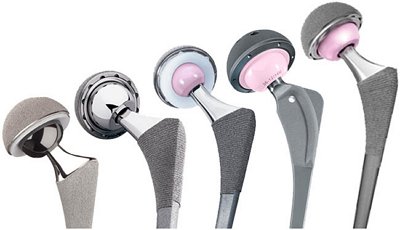 The service life of modern endoprostheses is measured in tens of years. They are made of biocompatible and bioinert metal alloys or ceramics. We install prostheses made of titanium alloys, ceramics, and polymer - this ensures their high wear resistance and minimizes the possibility of rejection by the human body. Endoprosthesis wear occurs under the influence of both external factors - human activity, trauma, and internal factors - transferred diseases, bone tissue condition, and others. An endoprosthesis will last a long time and without unnecessary trouble, if you take care of your body, lead an active and healthy lifestyle, eliminate bad habits, and treat and prevent diseases in time.
Hospitalization usually takes place a day before endoprosthesis, and discharge approximately a week after the intervention. During this time, a qualified rehabilitation doctor will teach you how to behave with a prosthetic joint, make the first movements correctly, get out of bed and sit down, and move around. You will also make an early rehabilitation plan with him and learn how to implement it correctly. Do not worry about the course of endoprosthetics, because all the cares and subtleties of preoperative preparation, as well as the nuances of actual surgical manipulation and the early postoperative period are taken care of by the specialists of our clinic.
How to deal with emotional stress before joint replacement?
It is important to trust the people to whom you entrust the most important thing - your health. To begin with, choose the doctor with whom you will be comfortable communicating. Discuss with him all the points that concern you. The specialists of the Rudenko Medical Center in tandem with anesthesiologists will answer all the questions you may have and will help you to get in a positive mood. It is important to remember that fear is normal and not shameful, it arises from the anticipation of the unknown. Therefore, in order to overcome it, you need to have as much information as possible about what will happen to you during and after surgery.
Sometimes it happens that unmotivated anxiety bothers the patient despite any beliefs.
And it's also normal when emotions take over common sense. Then the best way to get rid of fear will be to divert your attention to a new hobby, work or improvement of your surrounding world, adapting it to the needs of the upcoming rehabilitation period.
- Perhaps you have long wanted to change an uncomfortable sofa into a soft bed?
- Add a few new large pillows to the interior?
- Can you add some additional steps and railings in the bathroom to make it more comfortable to use?
All this will not only eliminate unnecessary reasons for worry, but also significantly ease the complications of the postoperative period.
How else can you eliminate fear and anxiety before surgery?
Taking care of your own health will also undoubtedly have a positive effect on reducing the level of anxiety before surgery.
- A balanced diet, reducing excess body weight, visiting the dentist and checking the blood sugar level. All this will not only give you confidence in the positive course of the joint replacement process, but will also be useful for the prevention of hypertension, diseases of the liver, and diabetes.
- Treat chronic diseases in advance, this can prevent infectious complications after surgery, because often the reason for poor healing of postoperative wounds is the presence of internal foci of infection.
- Gradually increase your physical activity. It will take a lot of strength and perseverance to restore the joints.
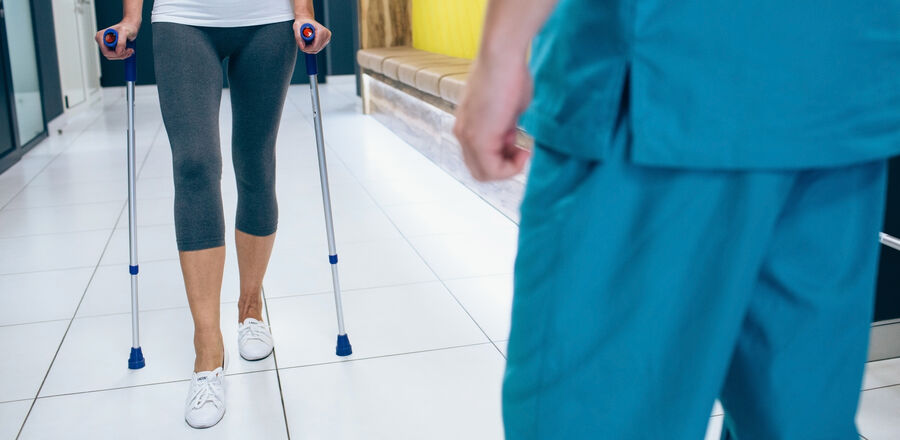
- Buy crutches, practice walking on them - this will help you learn to control your body weight and distribute it correctly.
Immediately before the operation, surround yourself with positivity - close people, good events, delicious food, favorite music. Do what you love, communicate with your family, limit contact with negative situations. If necessary, discuss with the doctor the prescription of sedatives or sleeping pills.
Remember, fear is normal, everyone can be afraid. The main thing is not to let this fear engulf you, to deprive you of the joy of moving freely and living a normal life. Trust the professionals and be sure that you will be satisfied with the result.
The Rudenko Medical Center is a team of specialists that is patient-oriented and achieves the maximum thanks to its skills and experience. We are trusted and we value this trust. Contact the phone numbers in Contacts and overcome your fear with us.