
The knee joint is one of the most complex structures of the human body in terms of anatomical structure, which provides maximum mobility of the limb for performing movements in almost all planes. The complex of periarticular and intraarticular ligaments is finely organized into a single mechanism, where each performs its direct role and is indispensable in this.
Symptoms of anterior cruciate ligament injury
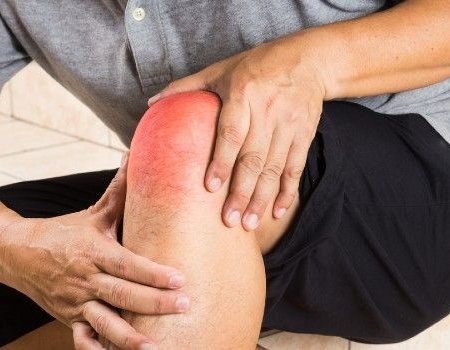
Damage to the knee ligaments will definitely not go unnoticed by the patient:
- knee swelling, increase in volume and presence of hematomas almost immediately after the injury
- impossibility of active movements in the joint
- crunching, clicking in the joint
- feeling of instability, pathological mobility of the knee structures
At the same time, patients usually do not experience pronounced pain. Pain syndrome can be a sign of combined trauma, additional meniscal tears, intra-articular fractures.
These signs will help you accurately determine the presence of a possible knee ligament injury and seek help from a specialized specialist, a traumatologist at the Rudenko Medical Center, in a timely manner.
Who is more likely to present with anterior cruciate ligament injury?
Given the highly organized and stable configuration of the knee joint, significant injuries to its ligamentous apparatus do not occur very often in patients in everyday life, which cannot be said about professional sports. The anterior cruciate ligament is the main stabilizer of the knee, providing joint movements in the anterior-posterior and medial directions and organizing the spatial orientation of the knee, automating complex movements.
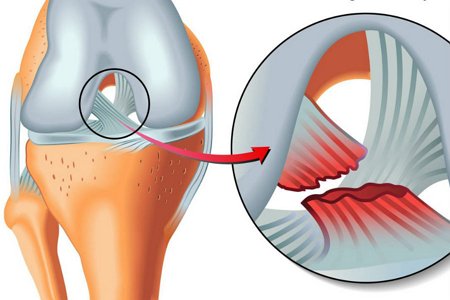 Anterior cruciate ligament injury is a high-energy injury that requires targeted impact of the injuring agent into the knee structures with a rotational direction and the integrity of the ankle and hip joints. That is why most often ligament pathologies will relate to sports injuries, namely:
- skiers
- snowboarders
- footballers, basketball players, volleyball players
- and also arise in traffic accidents and other types of events that are based on severe polytrauma
It is extremely important to get qualified help without wasting time, since injuries to the ligamentous apparatus of the knee require meticulous attention, including in matters of surgical treatment. Untreated injuries to the ligaments of the knee and the lack of professional rehabilitation will not only limit movements in the joint, but will also significantly affect the acceleration of degenerative processes in the joint structures. If the integrity of the anterior cruciate ligament is not restored, the unique "automaticity" of movements in the knee joint will be lost and there will be a need for constant control over the knee, which will cause habitual tension in the paraarticular muscles and the risk of uncontrolled traumatization of the meniscus. This will reduce the functionality of the entire limb as a whole, in particular due to incorrect load redistribution and the lack of adequate cushioning of the joint structures.
Treatment of anterior cruciate ligament injury
It is important to understand that the treatment of anterior cruciate ligament ruptures is exclusively surgical. No conservative methods or rehabilitation measures will restore the integrity of the ligament structure, and therefore there can be no return to normal mobility in everyday life, let alone sports.
Anterior cruciate ligament repair is performed arthroscopically, i.e. through small incisions in the skin with the help of instruments inserted into the joint cavity. The surgical intervention is performed under the control of a video camera, which allows the surgeon to fully visualize the process and intraoperatively assess the condition of the intra-articular structures, as well as the volume and course of the intervention. Arthroscopic repair of anterior cruciate ligament injuries consists in artificially creating a channel in the femur and tibia, as similar as possible to the course of the anatomical position of the ligament, and passing a graft made of artificial tissues or tissues of the human body through it.
Is it possible to sew fragments of one's own ligament without using additional tissues?
Technically it is possible, but the correct functioning of the sutured ligament is currently questionable. There is a very high risk of re-rupture of the sutured cruciate ligament, which can lead to a longer and more difficult rehabilitation period.
What grafts are currently used in anterior cruciate ligament reconstruction?
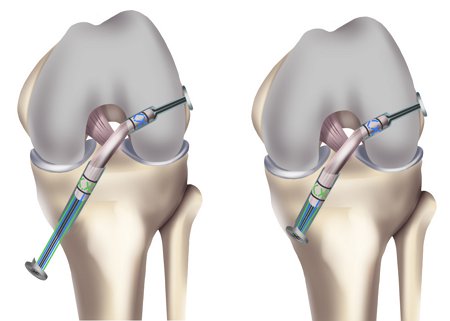
- Artificial
Their use has undeniable advantages:
- reduction in surgical time
- no need to harvest the patient's own tissues
- However, among the disadvantages of this type of substitute are:
- limited service life of the graft
- need to use metal retainers
- lack of fusion with the bone
- Allograft
The method is based on the use of donor tissues, but involves the risk of infection and the occurrence of an immunological reaction of rejection of foreign tissues.
- Autograft
This technique involves harvesting your own tendons from other anatomical areas, with or without a bone block. The method is fully biocompatible, does not increase the cost of surgery, and eliminates the possibility of infection. Since such an injury is common in athletes, it is important to plan the site of the graft before surgery so as not to further injure the muscle groups most actively involved in sports activities.
Anterior cruciate ligament reconstruction can be performed immediately after an injury. The procedure does not require specific preparation or a long hospital stay. The procedure is completely painless thanks to spinal anesthesia. Anterior cruciate ligament reconstruction requires specialists to have the skill and experience to choose the best tactics for managing the patient both before and after the operation. The doctors of the Rudenko Medical Center can rightfully be proud of this - our team professionally approaches each clinical task and finds optimal solutions, guided by international recommendations and based on their own many years of experience.
Rehabilitation after surgery begins the very next day. The limb is necessarily fixed with a removable device - a splint, plaster immobilization is usually not used. You can step on the operated leg using crutches, so as not to create excessive pressure on the limb. The crutch will be needed for the next four weeks for support, so take care in advance of the most comfortable device for you.
In general, normal range of motion is restored after 6-8 weeks, provided the postoperative period is without complications. Return to sports should be discussed with the team and the rehabilitation physician, taking into account the specifics of the specific sports activity.
Rudenko Medical Center in Zaporizhzhia is a leader in the field of orthopedics and traumatology with a high level of trust from patients. Our team certainly provides qualified assistance to all patients, maintaining not only professionalism, but also the most personalized approach. When contacting our medical center, you can be sure - we will preserve your health, taking all the worries upon ourselves. Rudenko Medical Center is professionalism, experience and care for everyone.