
Sometimes the joint reminds of itself not only with pain. A crunch, a click, a feeling of falling out - all this can bother the patient with joint diseases that are not visible to the naked eye. Then it is clear that it is time to contact a traumatologist at the Rudenko Medical Center.
Diagnostic imaging techniques for joints today provide an answer to almost every clinical problem. Therefore, a traumatologist usually prescribes arthroscopy when other methods - X-ray, MRI/CT, or conservative treatment - have not yielded results or do not provide a complete picture of the injury.
Arthroscopy - who? when? and for what?
Traumatologists at the Rudenko Medical Center are ready to answer all your questions and dispel any of your fears.
What is arthroscopy?
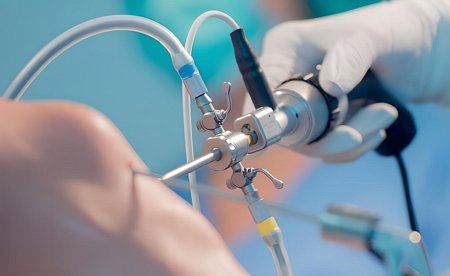
Behind this complex medical term, which may sound a bit scary, lies a technique that is a minimally invasive diagnostic and therapeutic procedure and aims to show the orthopedic traumatologist live in real time using a video camera what is happening inside your joint. The advantages of arthroscopy are difficult to overestimate:
- No need for long-term hospitalization
- Virtually no blood loss
- Fast and effective delivery of drugs directly into the joint cavity
- Sparing tissue damage, and accordingly, a good postoperative cosmetic effect
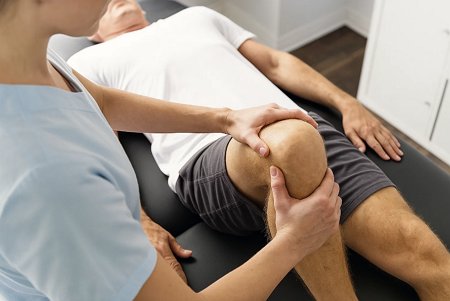
Despite the exciting name, arthroscopy is one of the most sparing surgical interventions in the field of traumatology. Planning for arthroscopy begins at an appointment with your traumatologist at the Rudenko Medical Center, who will ask about your complaints, medical history, clarify details about previously performed diagnostic or therapeutic measures, and also determine the tactics of further management of your medical history.
In fact, the diagnostic capabilities of arthroscopy allow this technique to be used to solve a fairly large list of clinical problems:
- chronic synovitis of unclear etiology
- chronic pain in the joint that is not amenable to treatment
- post-traumatic damage to the meniscus and other intra-articular structures
- monitoring the condition after ligament reconstruction or other operations
- tissue or fluid sampling for research
Since arthroscopy is not only a diagnostic procedure, but also a therapeutic one, it has the following indications:
- the need to deliver drugs directly into the joint cavity
- removal of foreign bodies, tissue fragments from the joint cavity
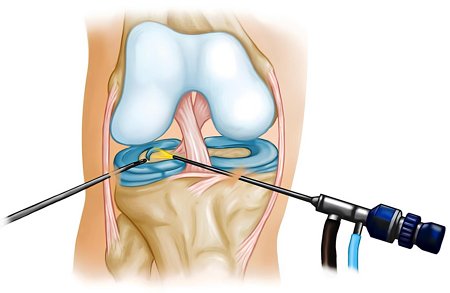
- treatment of meniscal pathology / resection, restoration of integrity
- plastics and fixation of the anterior cruciate ligament
- damage to articular cartilage - debridement, microfracture, chondroplasty
- synovial membrane pathology - synoviectomy and biopsy
- intraarticular adhesions
- joint instability
- degenerative-dystrophic changes of articular surfaces
How arthroscopy is performed: from the first step to the medical center to rehabilitation
Arthroscopy is a “one-day” surgical procedure. This means that in the morning the patient is hospitalized in the inpatient department of the Rudenko Medical Center, and 2 hours after the intervention or the next day he can return to his normal life. No long waiting lists, exhausting queues, long hospital stays and putting your daily rhythm on pause. Before arthroscopy, you will be examined again by an orthopedic traumatologist and consulted by an anesthesiologist to determine contraindications to anesthesia and to get acquainted with the features of your health.
Typically, arthroscopy is performed under regional anesthesia, meaning the patient is conscious and can observe the course of the intervention. In some cases, anesthesia may be used, in which case you will remain under the supervision of medical staff at the center until the next day. Before the intervention, premedication is performed, the patient is transported to the operating room, where anesthesia is administered and the actual surgical intervention begins. The surgical field is sterilely treated, while the arthroscope is prepared for operation. Through small incisions in the skin, long trocar instruments are inserted into the joint cavity, one of which has a video camera at the end, the image from which is broadcast on the screen for the surgeon, which provides complete intraoperative navigation. The joint is filled with a special fluid and the necessary manipulations are performed in the joint. The undeniable advantage of this method of intervention is its anemia. No massive blood loss or the need for postoperative infusion therapy.
After the arthroscopy is completed, the patient is transported to the postoperative ward, where after a while he will be able to eat and rest. The medical staff provides 24-hour supervision of the patient, adequate and timely pain relief, as well as assistance with any household needs.
The doctor will take the first steps after arthroscopy with you. How to walk correctly, distribute the load on the leg, walk up the stairs; when you can do sports or usual physical activity; taking the necessary medications and the need for specialized rehabilitation classes - all these nuances the traumatologist of the Rudenko Medical Center will discuss with you and will not leave any reason for concern. Most often, patients only experience temporary discomfort or swelling, which passes within a few days. Also, after the interventions performed, the doctors of the Rudenko Medical Center are ready to support you in the postoperative period and answer your questions, if such a need arises.
Considering that arthroscopy is a controlled minimally invasive surgical technique, it has a number of contraindications that must be taken into account when taking a history.
Among them:
- hemophilia
- decompensated diabetes mellitus
- decompensated cardiovascular pathologies and respiratory system diseases
- decompensated immunodeficiency states and rheumatological diseases
- acute period of mental conditions
Arthroscopy not only helps to get rid of pain, but also restores confidence in one's own body.
However, it is important to remember: success depends not only on the surgeon, but also on the patient himself - his discipline, compliance with recommendations and a gradual return to activity.
Arthroscopy is not a last resort, but a smart solution when the body needs help. It combines the precision of technology and the delicacy of the approach, allowing you to see what is hidden inside the joint and restore movement without pain.