
The war has undeniably changed our everyday life: always being ready for anything, keeping an emergency backpack packed since 2022, listening for the sound of air raid sirens at night, and often falling asleep in shelters in completely uncomfortable positions while holding our children. Providing a home with light, warmth, and drinking water is difficult during blackouts not only financially but also physically. The body gets tired of being constantly on alert and living in a “fight or flight” mode. Our health always requires attention, care, and support, and during war — even more so.
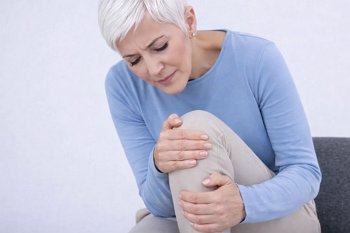 We can do more when we restore our strength and find time for ourselves. Pain in the lower back, large joints, aching sensations in the legs, and tingling in the feet — all of this may be a sign of muscle fatigue, even if you previously had no problems with the musculoskeletal system.
When the focus is constantly on external events, internal signals become “secondary.” Pain is perceived as something insignificant: “I’ll endure it,” “it’s not the right time,” “now is not the moment.”
But the body does not understand geopolitics. It reacts according to its own laws — through inflammation, swelling, and degeneration.
“Later” — the trap word
Orthopedic diseases do not immediately become a catastrophe for our body. The musculoskeletal system gradually loses its functionality, giving us signals and time to recognize that something is wrong with our body, gradually compensating for lost capabilities. But when the body’s compensatory abilities are exhausted, chronic conditions will inevitably remind you of themselves with a red flag and force you to seek medical attention.
- mild knee pain
- pulling sensation in the shoulder
- discomfort in the lower back
- everything starts small.
By seeking a consultation with an orthopedist at the Rudenko Medical Center in time, you can undergo examinations and detect the problem at early stages, accordingly adjusting your lifestyle in time and preventing irreversible consequences.
Without treatment, inflammatory and degenerative-dystrophic processes progress rapidly. A spinal protrusion will become a hernia, osteoarthritis will change the configuration of the joint and the structure of the bone, and inflammation will become chronic.
And constant pain is not only about physiology, but also about the quality of your life.
Prevention or treatment?
Prevention and early treatment are always cheaper than complex surgical interventions. Everyone understands this, but it often sounds abstract and without clear boundaries. But if we speak not in abstract phrases, but in specifics.
Initial examination minimal additional tests medication therapy (often only NSAIDs), physical therapy
versus
Expensive additional examinations surgical intervention, joint replacement long-term rehabilitation
Postponing treatment is not saving money. It is delayed costs that grow exponentially.
Loss of functionality
You may ignore minor discomfort, especially while living in a country at war — it may seem unimportant. At first you simply walk and move less, trying to spare the painful area. Then you start avoiding the stairs in your building. Later you refuse to go to the store because every step brings unbearable pain. Movement is life, and minimizing it inevitably leads to:
- muscle hypotrophy
- decreased muscle strength
- worsened blood circulation
- increase in body fat
- intensification of pain
And this list will only grow with degenerative changes in the body. When the system does not work as a single mechanism, all its components begin to fail.
Do not delay! RED FLAG
There are symptoms that require immediate medical attention:
- Increase in joint size, redness, and sharp pain
- Inability to stand on the leg
- Sharp limitation of active joint movements
- Sudden limb deformation
- Numbness, coldness, or sudden sharp pain in a limb
- Severe sudden weakness in the limbs
These signs may indicate a serious deterioration of the condition — from nerve innervation disorders to inflammatory or oncological processes.
Waiting in such cases is dangerous for life.
Self-care as an act of responsibility, not guilt
The war has changed each of us and continues to do so day by day. The past feels like something from another reality, and the feeling of guilt for living today permeates the consciousness of every Ukrainian. “Ordinary life” today means spending time with family, undergoing routine medical check-ups, and treating chronic diseases. We are used to giving everything to others, fighting for others, saving others, while confidently considering self-care as selfishness. Therefore, the Rudenko Medical Center considers it necessary to conduct educational work among Ukrainians through the YouTube platform via the link below, where the most relevant orthopedic topics will be discussed. Join the YouTube channel of the Rudenko Medical Center and find answers to any questions.
Taking care of yourself is not the guilt of the one who survived, but a strategy for long-term physical well-being so that you have the strength to continue helping others. It is impossible to be a support for everyone if you cannot become one for yourself.
Allow yourself to receive treatment without guilt.
Allow yourself to have energy and resources.
Allow your body to be your ally, not a battlefield.
Because responsibility for yourself is also a form of strength.