
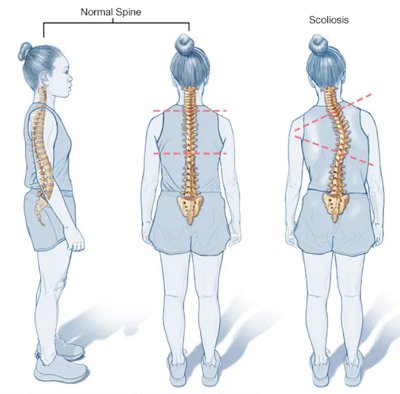
Scoliosis is a stable, progressive, congenital or acquired deformation of the spinal column, which consists in a change in the physiological position of the spinal axis. The axis can be deformed in a C- or S-shaped form, depending on the affected areas and the location of the central vertebra of the deformation angle, or its apex.
The gained disease is a consequence of the uneven distribution of the load on the spine and the advance of the muscular framework in development before the skeleton. Usually, in this case, scoliosis affects children of teenage or primary school age. But scoliosis can also occur in people over the age of eighteen.
Congenital pathology is caused by the following conditions:
- Diseases of the central nervous system - syringomyelia, infantile cerebral palsy
- Pathologies of metabolism, rickets
- Genetically determined conditions - Marfan syndrome and Ehlers-Danlos syndrome, which are also associated with joint hypermobility
- Systemic diseases, including rheumatological ones - juvenile rheumatoid arthritis, rheumatism
When should you associate back pain with scoliotic spinal deformity?
What should you pay attention to in order to contact the specialist on time and not waste time looking for non-existent diagnoses?
- if the main complaint is aching pain in the back, which worsens during a long stay on vertical
- if you notice asymmetry of waist triangles and shoulder levels
- the head is tilted forward
- in extreme cases, a rib hump begins to form, and therefore the deformation of the chest will be pronounced
These signs will help you recognize scoliosis at its initial manifestations, turn to a specialized specialist in time and prevent the development of irreversible negative consequences of the disease.
How is it possible to diagnose and confirm the diagnosis of scoliosis?
Experienced orthopaedists-traumatologists at the Rudenko Medical Center need a physical examination, a comprehensive anamnesis collection, and X-rays of the relevant sections of the spine with measurements of Cobb angles to determine the diagnosis and choose tactics for further work with the patient. Blood tests, urine tests, cardiograms and even ultrasound diagnostics are not required to recognize scoliosis.
How to treat and prevent the development of scoliotic spinal deformity?
To preserve the health of your spine and prevent the development of scoliosis, the selection of physical exercises and lifestyle correction with an emphasis on physical activity, which will have a positive effect on strengthening the muscular framework of the chest and lower back, will help. Doctors consider swimming and athletics to be the best method of choice for this. It will not be needless to start the day with light exercise in the morning to warm up the muscles and prepare them for the load during the working day. Physical therapy and massage also positively contribute to the growth and development of muscles, due to dosed load and full relaxation.
There is no etiotropic medical treatment for scoliotic spinal deformity, which means that it cannot be corrected with pills or injections.
"Prevention is always better than cure." This rule is extremely relevant for patients with posture problems or initial signs of scoliosis. Rudenko Medical Center is a place where modern technologies work together with long-term experience of Ukraine and the world. Specialists of the clinic successfully use the assets of medicine, combining them with a personalized approach to each patient.